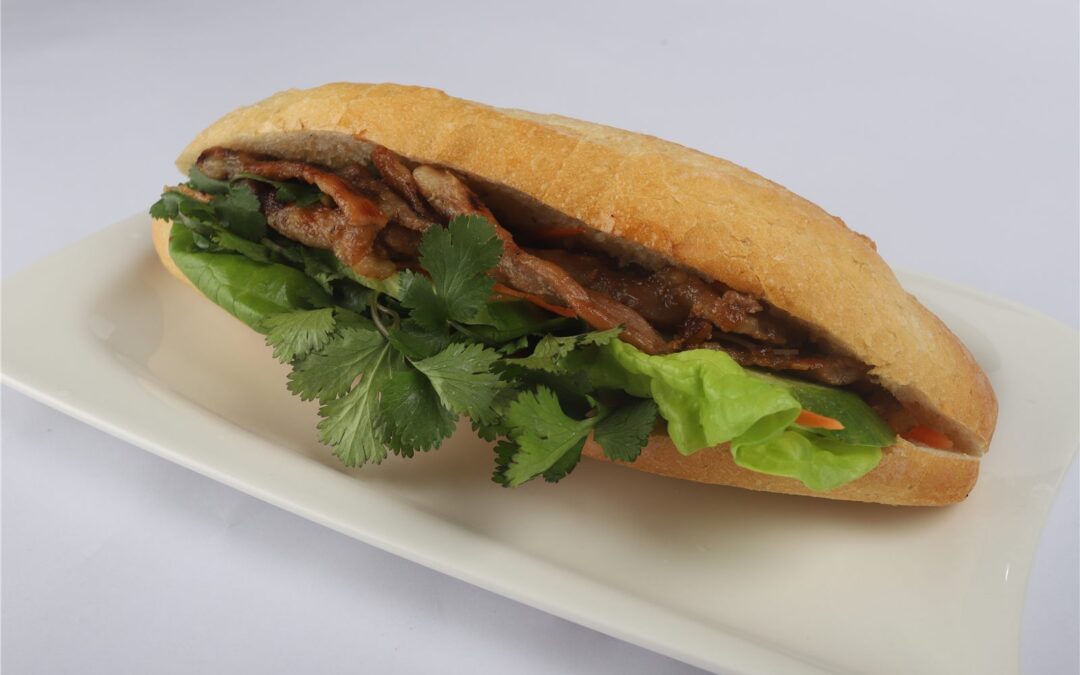
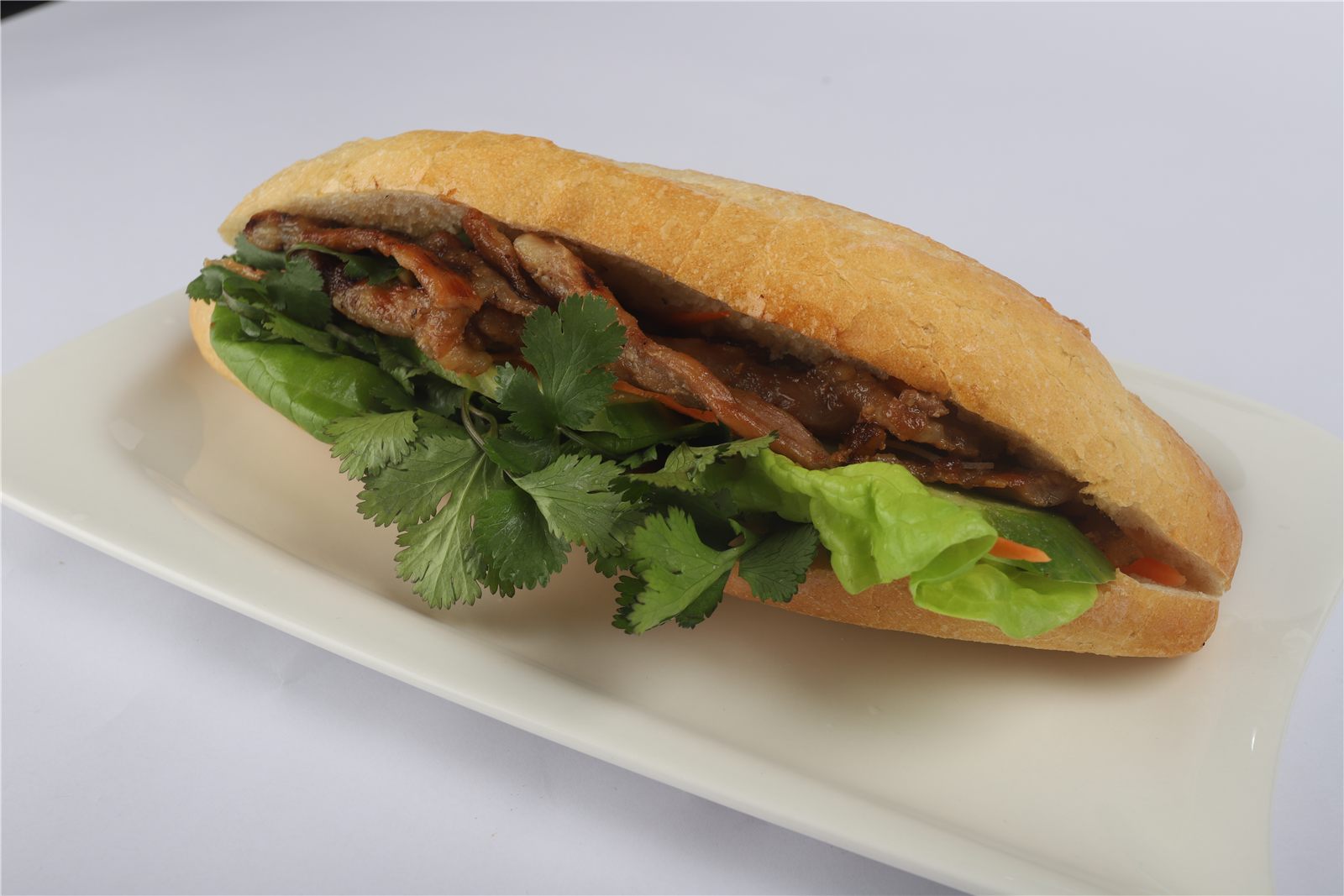
Bánh mì is the Vietnamese baguette sandwich and one of the best-known street foods in the world. It combines French bread with Vietnamese flavours: a crackly crust, creamy pâté, meat, pickled vegetables, coriander and chilli. In Prague it has become a favourite quick lunch.
The origin of bánh mì
The French brought the baguette to Vietnam in the mid-19th century. At first it was food for the French and the wealthy. The Vietnamese called it “bánh Tây” (Western bread) and usually ate it with milk or sugar.
Vietnamese bakers gradually adapted it to the hot, humid climate and local taste: the loaf is shorter, with an airy crumb and a thin, crisp crust. Instead of butter and cheese, the filling is pâté, mayonnaise, meat and pickles. After 1954, many people from the north moved to Saigon and opened bakeries and sandwich stalls. Shops such as Hòa Mã (opened in 1958) turned the pâté, pork sausage and pickle sandwich into the city’s favourite fast food. In Vietnamese, bánh mì simply means “bread”.
From the 1970s and 1980s, Vietnamese emigrants took bánh mì to the US, Australia and Europe. In 2011 the word “banh mi” entered the Oxford English Dictionary, and on 24 March 2024 Google celebrated bánh mì with its own Doodle.
Regional styles
- Hanoi: a simple filling with plenty of pâté; the bread is often toasted again until crisp.
- Hai Phong: spicy bánh mì cay, a small finger-thin roll with pâté and chilli sauce.
- Hội An: famous for Bánh Mì Phượng and each stall’s own sauce.
- Saigon: a big loaf loaded with cold cuts, chả lụa sausage, pickles, herbs and chilli.
What’s inside a bánh mì
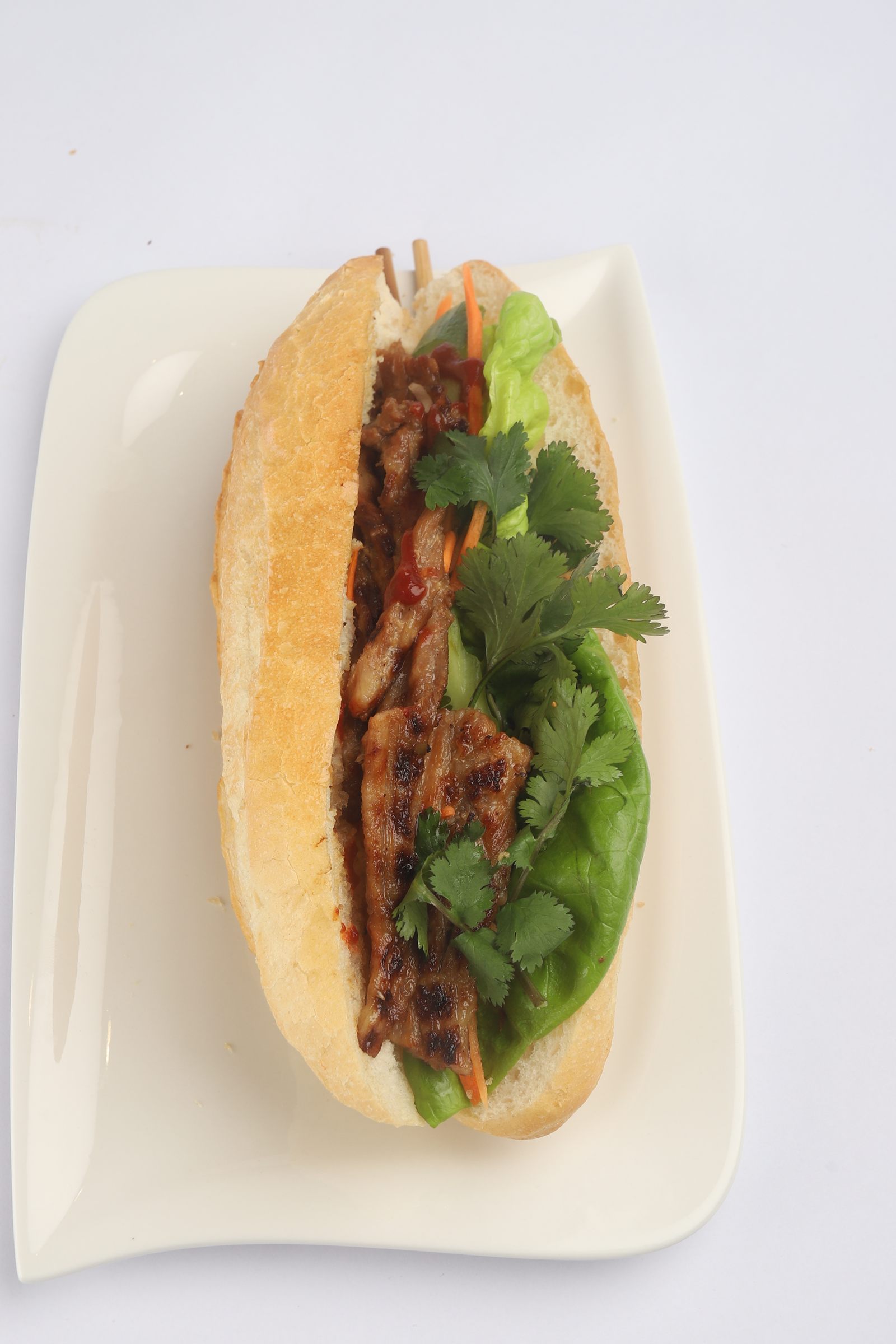
- Pâté and mayonnaise spread on the bread
- Meat: chả lụa pork sausage, roast pork, grilled meat or chicken
- Pickled carrot and daikon (đồ chua) for freshness
- Cucumber, coriander, spring onion and fresh chilli
- a few drops of soy or Maggi seasoning
Popular types of bánh mì
- Bánh mì thịt: the classic with pork and sausage
- Bánh mì gà: with chicken
- Bánh mì xíu mại: with meatballs in tomato sauce
- Bánh mì trứng: with egg, a popular breakfast
- Bánh mì chay: a vegetarian version with tofu
Bánh mì in Prague
Many Vietnamese bistros in central Prague sell bánh mì, but the biggest choice in one place is at Sapa market, where Bánh Mì Má Lùm is a local favourite. More places in Vietnamese restaurants in Prague.
How to spot a good bánh mì
- The bread is warm and crisp, never chewy.
- The pickles are fresh and lightly sour.
- There are plenty of herbs and coriander.
- It is made to order so the filling doesn’t make the bread soggy.
How to enjoy bánh mì
- Eat it straight away. Bánh mì is best in the first 10–15 minutes, while the crust is crisp and the pickles are fresh.
- Order it your way. Ask for more or less chilli, pâté or coriander, or skip the cucumber.
- Dip it. In Vietnam the bread is also eaten with bò kho beef stew, chicken curry or xíu mại meatballs. In the south this is a popular breakfast.
- Drink iced coffee or iced tea with it. The bittersweet coffee with condensed milk balances the rich pâté.
- Reheat it properly. If you eat it later, take out the vegetables and herbs and crisp the bread for 3–5 minutes in an oven or air fryer at about 180 °C. A microwave makes it chewy.
How does bánh mì differ from a sub, a torta or a panino? Read Bánh mì vs sandwiches around the world.
FAQ
Is bánh mì spicy?
Only if you ask for chilli. The seller will usually ask you.
How much does bánh mì cost in Prague?
Roughly 100 to 180 CZK depending on the filling and the place.
What should I drink with bánh mì?
Ideally a Vietnamese iced coffee with condensed milk.